
However, over time – particularly with age and hormonal change – that inner environment can become more sensitive. The lining can become less resilient, and the nerves beneath it may respond more quickly to stimulation, resulting in weakness, leaks and incontinence. .
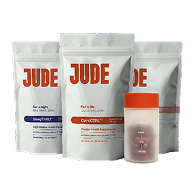
As our understanding of bladder biology has evolved, we identified a botanical with emerging relevance to both of these areas: sage. Its addition to CoreCTRL reflects a careful review of the research and a decision to strengthen support at the tissue level, not simply adjust the formula for change’s sake.
Dr Zena Wehbe, Jude’s Lead Scientist, explains:
“When we look at bladder sensitivity, we need to consider what is happening at the level of the cells. While we don’t always know the cause of OAB, it does ultimately manifest as overactive smooth muscle cells in the bladder wall and sometimes as overactive nerves, making us feel especially sensitive to the sensation of needing to wee. For effective relief we need to be able to calm these tissues, and our lab testing proved that sage can do that.”
The Biological Profile of Sage
Sage contains several naturally occurring compounds, including rosmarinic acid and plant flavonoids. In laboratory research, these compounds have shown antioxidant and antimicrobial activity. Antioxidants are relevant here because they help protect tissues from ongoing cellular stress, supporting their ability to remain stable and resilient over time.
Early-stage studies have also examined how sage behaves in bladder smooth muscle. Our product testing in our community verified that the inclusion of sage, among others, provided a much more rapid relief from symptoms of OAB compared to our previous formula.
How the Bladder Muscle and Nerves Work Together
As mentioned earlier, bladder comfort also depends on how the bladder muscle and its nerve signals work together. As the bladder fills, the muscle needs to stay relaxed and stretch comfortably. It should only contract when the timing is right. When that signalling becomes less well balanced, contractions can happen sooner or more strongly than needed.
Why sage over other alternatives?
When reviewing ingredients, we look for clear relevance to how the bladder functions, not just general wellness associations. Sage stood out because it relates to both smooth muscle and nerve relaxation.
It can also be reliably standardised, meaning the extract used in CoreCTRL is carefully produced and tested for purity, consistency and controlled thujone levels within established safety guidelines, so it is included for a defined scientific reason at a dependable strength.
Dr Zena Wehbe, Jude’s Lead Scientist, explains:
“When we reformulate, we are looking for unexplored cellular pathways that help calm the smooth muscles and nerves related to the bladder. We work backwards, from the cell outwards, where we look for compounds that could support those pathways and test them in the lab. We then include them in the formulas that we test in our community to validate our various hypotheses.”
Integrating sage into a system approach
CoreCTRL™ is designed to support the bladder as a connected system. Pumpkin seed extract provides concentrated L-Arginine and glycine, supporting smooth muscle function and connective tissue structure. Soy germ extract supplies isoflavones that help rebuild the inner lining and the atrophied smooth muscle layer. Magnesium and vitamin B6 contribute to normal nervous system function, and zinc supports normal protein synthesis and tissue maintenance.
Sage strengthens this foundation to calm muscles and nerves. It does not replace what is already there. It complements it.
Bladder health is shaped by tissue resilience, muscle coordination and hormonal influences over time. Supporting these systems nutritionally requires precision and consistency, not quick fixes. The addition of sage in CoreCTRL™ reflects that approach: a considered refinement, grounded in science and included with clarity about its role – and for women who want to understand what they are taking and why, that transparency matters.
2 min quiz
Not sure which supplement is right for you?
 Answer a few questions about your symptomsTrusted by 150,000+ womenFewer urgent trips to the bathroom
THE SUNDAY SUPPLEMENT
Bladder care, in your inbox
Join our newsletter for tips and tricks to life's trickly moments.
Feel secure all day long with our range of bladder care products. The entire range has been created with our team of experts and community of real women.
No spam. Unsubscribe anytime.